Saturday, August 18, 2018

Halloween Bingo Randomness

I think I just spent way too much time working out how I'm going to track my Halloween Bingo calls and books read... and I'm not even sure if it'll work out the way I want it to.  I went back and forth between the table I used last year, to just making a bullet point list, to playing with a new idea that you can see below.  It's sort of a table slash card that I wasted hours working on just to get the dimensions right, only to realize that I might have made things more complicated than necessary.

I may or may not actually use it.  -_-  And really, I need to be thinking about what marker to put on my actual Bingo card rather than playing with tables and html.


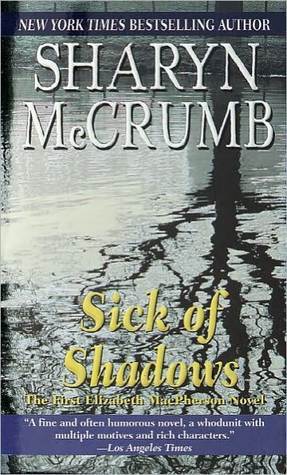
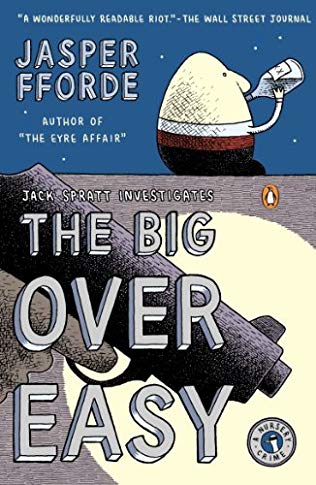
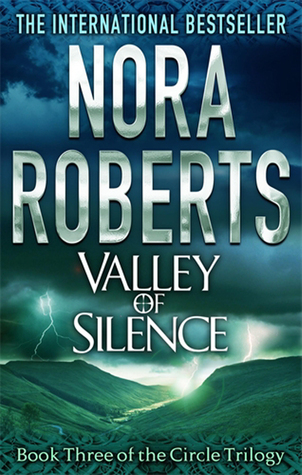
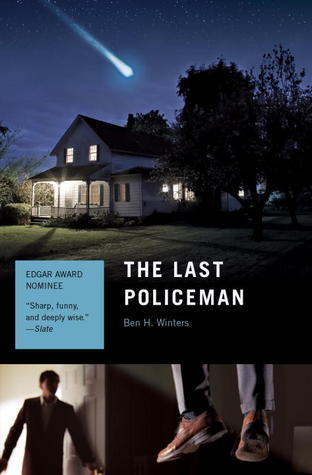
But anyway, here's another (different) look at the books I've chosen for my squares!  A couple new changes have been made.

So yes, September needs to arrive soon so I can quit wasting time outlining and formatting update posts, and start reading all the books I'm actually very much looking forward to reading.

Really, I just need to step away from my computer for a couple days and finish reading a couple other books.


Called:  
Read:  
Called:  
Read:  
Called:  
Read:  
Called:  
Read:  
Called:  
Read:  
~*~*~*~
Called:  
Read:  
Called:  
Read:  
Called:  
Read:  
Called:  
Read:  
Called:  
Read:  
~*~*~*~
Called:  
Read:  
Called:  
Read:  
Called:  
Read:  
Called:  
Read:  
Called:  
Read:  
~*~*~*~
Called:  
Read:  
Called:  
Read:  
Called:  
Read:  
Called:  
Read:  
Called:  
Read:  
~*~*~*~
Called:  
Read:  
Called:  
Read:  
Called:  
Read:  
Called:  
Read:  
Called:  
Read:  


Friday, August 17, 2018

Flat Book Society | September 2018 Read

Get Well Soon - History's Worst Plagues and the Heroes Who Fought Them

by Jennifer Wright

~ Goodreads ~


I have totally been slacking off in all Flat Book Society activities the past year after finishing Forensics.  With my reading slump lifting now, and so much more activity going on at Booklikes, I'm ready to start participating in reading activities again.

The next Flat book Society read will be Get Well Soon by Jennifer Wright, which we have already determined is eligible for the Free Space of Halloween Bingo, so at least it won't feel like an extra read on top of the twenty-five Halloween Bingo squares we all plan to read for as well.

I've done a cursory search of the library and found that this book doesn't yet exist in it's system.  And I'm concerned that even if I were to recommend it, it may not get added by the time the club starts reading.  So... I'm going to make the executive decision to just go ahead and purchase the book via Kindle since it's been a long time since I've actually done a big book splurge anyway.

Meanwhile, on another whim, I decided to create a book club page where I will track all the book club reads I participate in.  You can find this page on my menu bar at the top of the blog, or here.

Very Brief Thoughts: The Other Lady Vanishes

The Other Lady Vanishes

by Amanda Quick
Book 2 of Burning Cove

~ Goodreads ~

Rating:  3.5 Stars

After escaping from a private sanitarium, Adelaide Blake arrives in Burning Cove, California, desperate to start over.

Working at an herbal tea shop puts her on the radar of those who frequent the seaside resort town: Hollywood movers and shakers always in need of hangover cures and tonics.  One such customer is Jake Truett, a recently widowed businessman in town for a therapeutic rest.  But unbeknownst to Adelaide, his exhaustion is just a cover.

In Burning Cove, no one is who they seem. Behind facades of glamour and power hide drug dealers, gangsters, and grifters.  Into this make-believe world comes psychic to the stars Madame Zolanda.  Adelaide and Jake know better than to fall for her kind of con.  But when the medium becomes a victim of her own dire prediction and is killed, they'll be drawn into a murky world of duplicity and misdirection.

Neither Adelaide or Jake can predict that in the shadowy underground they'll find connections to the woman Adelaide used to be--and uncover the specter of a killer who's been real all along...


The truth is, there were moments when I forgot that this book takes place in the 1930s until those little moments where things like "auto courts," or the fact that no one has a cell phone pops up, and our couple needs to find a pay phone just to make a call.  Or what about the whole collect calling long distance thing?  I don't think I've even heard of anyone having to that on a normal basis anymore.

But getting back on track, the voice of this book actually sometimes feels pretty modern; though I'm not as familiar with the 1930s, to be honest.

Like the first book in this series, there were several different POVs, though I'm not as conflicted about that as I'd been for the previous book.  This wasn't as confusing, I guess.

Meanwhile, I probably would have given this book a higher rating, because the truth is, it was very enjoyable to read.  But I started noticing a lot of similarities between this book and another earlier book by Jayne Ann Krentz, and realized that our beloved author might be recycling some of her own story details, even if more towards the end.  While I'm a little disappointed about that, I'm sure it wouldn't have been as noticeable if I hadn't just, very recently, finished reading said book with the similar scenes.

Otherwise, as I'd already stated, this book is still very enjoyable and full of the usual Amanda Quick loveliness.


Thoughts: Holding On

Holding On

by Pamela Clare
Book 6 of Colorado High Country

~ Goodreads ~

Rating:  4.0 Stars

A hero barely holding on…

Harrison Conrad returned to Scarlet Springs from Nepal, the sole survivor of a freak accident on Mt. Everest. Shattered and grieving for his friends, he vows never to climb again and retreats into a bottle of whiskey—until Kenzie Morgan shows up at his door with a tiny puppy asking for his help. He’s the last person in the world she should ask to foster this little furball. He’s barely capable of managing his own life right now, let alone caring for a helpless, adorable, fluffy puppy. But Conrad has always had a thing for Kenzie with her bright smile and sweet curves. One look into her pleading blue eyes, and he can’t say no.

The woman who won’t let him fall…

Kenzie Morgan’s life went to the dogs years ago. A successful search dog trainer and kennel owner, she gets her fill of adventure volunteering for the Rocky Mountain Search & Rescue Team. The only thing missing from her busy life is love. It’s not easy finding Mr. Right in a small mountain town, especially when she’s unwilling to date climbers. She long ago swore never again to fall for a guy who might one day leave her for a rock. When Conrad returns from a climbing trip haunted by the catastrophe that killed his best friend, Kenzie can see he’s hurting and wants to help. She just might have the perfect way to bring him back to the world of the living. But friendship quickly turns into something more—and now she’s risking her heart to heal his.


I have a love for all things animals, and I'm also extremely interested in aspects of Search and Rescue, especially of the doggy variety.  So knowing that Kenzie and her lovely golden retriever, Gizmo, are a wonderful SAR K9 team was already a winner for me.  To make things even better, Pamela doesn't skimp on the SAR aspects of this book, which as been true from the outset of Colorado High Country.

Sure, sometimes the activities can get a little mundane, but unlike another book with a Search and Rescue dog involved that I'd read a while back, this one gets more involved than just using the descriptor as part of the character bio.  We got to see a little bit of the training, and some of the activities that SAR dogs participate in; we got to see Gizmo renew his SAR status.

It also helped that we got to see Kenzie in the middle of training a new SAR dog, with the introduction of Gabby at the beginning of the book.  Puppies make my heart melt.

Which is probably why I'm rambling in this review.

Yes, this is a book about romance.  But the doggies were really the stars.

Not that the rest of the book wasn't great.  Pamela has a way of infusing her books with tons of heartfelt moments, and a lot of significant things to think about.

And as much as I'm not a huge fan of the "love can cure all ailments" trope, I actually thought the idea was quite apt in this book.  Because falling in love with Kenzie wasn't the only factor that brought Harrison back out of his deep depression after surviving the Mt. Everest ascent that took his best friend's life, as well as the lives of two other climbers.  I liked that other people played a role as well, between the SAR team leader, Megs being the voice of reason who brings him home and snaps him out of other dark moments, to the wonders that having a puppy can bring to anyone, period.

There was also the inclusion of Esri, the therapist and Harrison's strange willingness to open up to her and just talk about what happened.  While I thought that that might have been a little too easy, I still appreciate the fact that we have a professional therapist helping Harrison, rather than just throwing the "love cures everything" trope out there.

I'm not going to pretend to be an expert at this type of thing.  But I'm glad that Pamela doesn't just stick her characters with dark pasts or tragic histories, and then just lets those incidents lie there as simply a part of their back story.  I like that she actually addresses the issues, rather than, once again, letting the "love cures all" trope take over.

And let's not forget how well Pamela does suspense as well.  She can't seem to get away from it, no matter that Colorado High Country is a contemporary romance series; most of the books in this series have had a brief suspense tangent included.  Let's face it, Ms. Clare--you love romantic suspense as much as the rest of us do.  Let's roll out some more I-Team novels!


Sunday, August 12, 2018

Thoughts: A Wrinkle in Time

A Wrinkle in Time

by Madelein L'Engle
Book 1 of Time Quintet

~ Goodreads ~

Rating:  2.0 Stars

It was a dark and stormy night; Meg Murry, her small brother Charles Wallace, and her mother had come down to the kitchen for a midnight snack when they were upset by the arrival of a most disturbing stranger.

"Wild nights are my glory," the unearthly stranger told them. "I just got caught in a downdraft and blown off course. Let me be on my way. Speaking of way, by the way, there is such a thing as a tesseract".

Meg's father had been experimenting with this fifth dimension of time travel when he mysteriously disappeared. Now the time has come for Meg, her friend Calvin, and Charles Wallace to rescue him. But can they outwit the forces of evil they will encounter on their heart-stopping journey through space?


I am of the impression that I'm one of the minority who either just didn't like this book, or who didn't understand the grandness of this book.  I don't know which it is; take your pick.

Maybe I'm just a pretentious bitch who doesn't like classics because they're classics.  Or maybe not all classics are really all that good despite awards and hype and popularity.

But let's clarify...

The book is well written with imagery and description at some points, while at other points it gets pretty vague and sketchy.  And just like that, the narration opts to explain away why things are confusing with the fact that, it's not a concept you understand but some things are just known.  "What is the fifth dimension?"  It's not something that can be explained, it's something that you "just know."  "How does one tesser? And what does that even mean?"  Again, this is something that cannot be explained with words; you "just know" what it is and how it works.  "Who or What is Mrs. Whatsit?"  Again, stop trying to explain these things with words; some things "just have to be known."

And this is pretty hard to stomach, even as an adult who loves to read fantasy a lot.  Just as well, the book involves the presence of two brilliant scientists, so you would have thought that the logic in the story itself would make a little more sense.

The world has potential, I'll give it that.  And maybe within the next four books of the series, things will come together a lot more enticingly.  But as far as the story progression goes, A Wrinkle in Time was pretty boring.  And frustrating.  There isn't even a means to explain away The Dark Thing or "IT", which is pretty much summed up as "darkness" or "evil", plain and simple.

As a children's book, I guess this works out pretty well.  Maybe had I read it when I was younger I would have been in awe of it, though I'm certain that the characters might have frustrated me anyway.

The kids are flat and boring when they're not annoying me.  The three... I'll call them: "The Mysterious Beings Who Introduce the Quest", are flighty and confusing.  The parents barely made enough of an appearance to really seem important.  I especially found it a little insulting to find that Mom is an excellent, "brilliant" scientist, but she still spends more of her time being domestic while "the man" gets to go on government missions and adventures.

Really?

Okay.  So factoring in the time at which this book was written, I suppose we can account for the gender double standards.

To be honest, the book started out pretty good and I was into it for the first four or five chapters.  Meg was a pretty ideal heroine for young girls--she's a nerd who's good at math, spends time doing academic stuff with her parents, and she's not "that quiet, pretty girl" in school who's cynical about her own looks to the point that you want to slap some sense into her.  No, in fact, she's a troublemaker because she's misunderstood for her lack of trying to conform to the way that public education requires of you.  She wears glasses and braces and is described by the in-story background characters as "that unattractive girl".  She was realistic with her own age-appropriate issues to deal with, and she was the type of girl you would root for to come out on top.

And there was no love triangle.

And then we start the adventure and she does this thing where she cries, yells, cries some more, shrieks, screams, talks in exclamation points 90% of the time...  Basically, she goes from a pretty ideal heroine to a hysterical damsel (despite the fact that she was never really in distress for much of the time she was being hysterical).  On top of that, I felt that she lacked a lot of sense as well.

I feel like I'm one of few people who read this book who just didn't like Meg despite her affinity for brainy math problems and her non-standard-ness as a female main character in a young adult/middle grade novel.  Because while I love that our main character is a girl who is non-standard from the norm, it doesn't escape me that she is set up to be the one special main character.

All in all, this book could have been good if parts weren't so vague and if explanations didn't get filed away under "it just is" and then concluded the book in that fashion.

Moral of the story (which might work in a fantasy world if you want to keep your kids shielded from real life): Evil just is and love conquers all.

Also, parents aren't infallible, which apparently gives a child the right to be rude and disrespectful because Daddy Dearest can't make everything right?  I'm still trying to process that one, because from where I come from, the stuff that Meg was spouting to her father after they escaped the Great Almighty IT the first time would never even have the audacity to fly around my parents.


This book was read as part of my 2014 TBR Pile Challenge hosted by Roof Beam Reader.


This review was originally posted at Ani's Book Abyss / BookLikes in August 2014.


List of Thoughts: Elantris

Elantris

by Brandon Sanderson
Book 1 of Elantris

~ Goodreads ~

Rating:  3.5 Stars

**Elantris is also part of The Cosmere universe where a select few of Brandon Sanderson's high fantasies take place.  All of these books may not be interconnected, story-wise, but they all share a single creation myth and cosmology.  (source: Goodreads)
**See also:  http://stormlightarchive.wikia.com/wiki/Cosmere
Side Note on 5/5/18:  This review was copied and pasted direct from BookLikes, but I have taken liberties and edited some parts of it.  Thank you, and happy reading!


I had so many thoughts about this book, but I really wasn’t sure how to express them properly (as if I ever do).  I had to sit on my thoughts for a while, and had hoped to have some sort of review concocted within a week or two.  Needless to say, this review ended up being long overdue upon finally publishing it.

Overall, while I had some hang-ups about some of Elantris’s progression and the separate conflicts that dominated the book itself, everything seemed to tie together extremely well in the conclusion (as has been the norm for a Brandon Sanderson novel)--while you might think these threads aren’t significant or related, they very quickly prove you wrong in the end.

Elantris is Brandon Sanderson’s debut novel (so I’ve read), and for a debut novel, Sanderson creates a really amazing world with colorful characters and a rich, extensive culture of people and history.  Even parts of the conflict could be compelling if I cared enough about politics to really get into it.  Any doubts I might have had about how much I would end up liking Elantris quickly went away as the story drew to a close.  While I might have gotten a bit impatient with some parts of the story line, the twists and turns, the climax, and the ending of the book earned all of my attention and excitement and awe right back.


The Official Story Blurb:
Elantris was the capital of Arelon: gigantic, beautiful, literally radiant, filled with benevolent beings who used their powerful magical abilities for the benefit of all.  Yet each of these demigods was once an ordinary person until touched by the mysterious transforming power of the Shaod.  Ten years ago, without warning, the magic failed.  Elantrians became wizened, leper-like, powerless creatures, and Elantris itself dark, filthy, and crumbling.

Arelon's new capital, Kae, crouches in the shadow of Elantris.  Princess Sarene of Teod arrives for a marriage of state with Crown Prince Raoden, hoping -- based on their correspondence -- to also find love.  She finds instead that Raoden has died and she is considered his widow.  Both Teod and Arelon are under threat as the last remaining holdouts against the imperial ambitions of the ruthless religious fanatics of Fjordell.  So Sarene decides to use her new status to counter the machinations of Hrathen, a Fjordell high priest who has come to Kae to convert Arelon and claim it for his emperor and his god.

But neither Sarene nor Hrathen suspect the truth about Prince Raoden.  Stricken by the same curse that ruined Elantris, Raoden was secretly exiled by his father to the dark city.  His struggle to help the wretches trapped there begins a series of events that will bring hope to Arelon, and perhaps reveal the secret of Elantris itself.


My Thoughts:
As I stated, I’m no good at expressing my thoughts for something this epically good.  So in the long run, I just opted for two very personally opinion-based lists on what I liked and what I didn’t like.  It wasn’t easy to narrow down a lot of things, as I had actually sat down and done a random free-write of the thoughts going through my head about the three main characters of Elantris.  I ended up with three pages of repetitive thoughts which I could very readily sum up in a few short bullet-points without too much dramatic or boring detail.


What I Liked:
  • The world building was awesome!  If I had read more of Sanderson’s books instead of just the Mistborn Trilogy and Steelheart, I might even say that the world building was Brandon Sanderson epically awesome!  But I don’t know if I qualify to make that statement since it’s not like I’m a seasoned high fantasy reader nor an expert on Brandon Sanderson novels.
    • Nonetheless, I found Elantris to have a very creative world with great attention to detail to the people, the cultures, the history, and even a lot of the backstory.  It’s written very well without seeming like it contained a giant prologue of info dump or textbook style history lessons.
  • The “Elantrian Mystery” story arc part of the book was my more favorite conflict in Elantris.
    • I’m going to admit that the other parts of the book (with Sarene and Hrathen as the narrative POVs) didn’t grab my attention as much as the mystery behind the fall of Elantris did (with Raoden’s narrative POV).
    • Elantris can easily be construed as being two different storylines (three if we really want to split hairs, but Sarene and Hrathen are actually working alongside one single conflict anyway).  We have the mystery of why Elantris is now in ruins, and then we have the political struggles of Arelon and the political games that Sarene and Hrathen are both playing as a bid for power in Arelon.
    • The parts depicting the Elantris mystery was intriguing and hooked my attention from the start.
    • In contrast, the political posturing between Sarene and Hrathen felt tedious and started getting a bit frustrating for me to follow.  It felt like filler material, conveniently used as a device for the reader to get to know what’s going on with Sarene and Hrathen since neither can really have a story line with Raoden (who is trapped in Elantris), so that we can see that Sarene and Hrathen are also important characters.
    • Again, both story lines converge in the end anyway and you realize that, yes, these characters and their political posturing WAS pretty important in light of the bigger picture.
  • I liked Sarene in that she’s strong, independent, competent, witty, and take-charge and feisty.  And she’s well-liked. A classic Mary Sue. (More on her later on the flip-side of the list though.)
  • Raoden’s ability to defuse all of his problems was pretty admirable as well.  And he’s also that competent, intelligent, take-charge, witty Mr. Perfect.  In a way.
  • Hrathen, though… Hrathen was surprisingly the more complex and interesting character of the three--of all the characters in the book, even.  I was indifferent to him at first in that “he’s the main antagonist so I’m automatically going to discount him” sort of way.  But by the end of the book, I found him to be much more interesting than the rest of the characters even though he’s the antagonist of the story, because he’s much more complex than I had given him credit for (and much more complex than the other characters, period).


What I Did Not Like:
  • There were moments when the story dragged.  As awesome as the book was, I DID fall asleep at least once during some of the Sarene-and-Hrathen-political-games story arc.  I’m really sorry.  I’m sure a lot of people probably find the political aspects of high fantasy interesting, but I’ve always been a “zone out” type of person when it comes to reading about politics.  That’s my problem and my preference, and nothing to do with the devices nor the author nor the book.
    • I’m more of an adventurous journey type of girl when it comes to high fantasy.
    • But that doesn’t mean that I didn’t admire Sarene her ability to take charge and play those games with Hrathen.  Nor did it keep me from feeling a little bit of interest in what each character’s next move would be to counter each other--there were some points that I did find interesting.
  • And thus, in my mind, too much of the book focused on the political posturing between Sarene and Hrathen and their respective parties of followers outside of the Elantrian city walls.  It was fun, in some ways, but instead, I would have liked to focus more on the goings-on within the fallen city, and the intrigues of Raoden rebuilding a civil society from ruins while trying to solve the mystery of why Elantris suddenly lost all of its power ten years prior to the current story line.
    • Yay for mystery investigations of all kinds!
  • Sarene’s Mary Sue characterization coupled with some of her own personal actions brought me to exasperated frustration at times.  It got to a point where I was starting to get annoyed with her, and would have really disliked her if she weren’t so competent and intelligent and strong and witty and well-liked.
    • The fact that she’s good at everything except the traditionally “feminine” tasks and activities made her fairly standard as the typical Mary Sue character of any and all novels.  Because, why is that such a standard necessity in most female heroines anyway?  And then, even though she’s near perfect, she’s still not quite perfect; she’s only perfect enough to be “better” than all the other women in the entire book even if not any of the men.
    • It makes me roll my eyes, because this occurs all too often in a lot of stories.  Make the main female character stand out by being the only female character who is strong, independent, witty, intelligent, forward-thinking, etc., etc., etc…  Because the world in one fictional story is much too small for there to be one more female character with those same attributes.  Because it makes her special.
    • She has to be passably good at everything, but in the end, there is always another man in the story who is better than her at any specific activity.  It rankles, really…
    • What really gets me going, however, is that, for all of Sarene’s stances and talks about being an independent woman and being forward-thinking and not being restricted by gender defining roles… she spends a lot of time letting herself be defined by the men around her.  She leaves her home kingdom because she can’t find a suitable husband, because no one will have her because she is different than other women, because she is more independent and prefers leading a kingdom and dealing in politics rather than attending balls or fishing for wealthy husbands or finding the latest fashions.  She defines herself as either “the king of Teod’s spinster daughter” (who is in her mid-twenties, BTW) or as “the widow of the prince of Arelon”.
    • How about being known as a princess?  How about being known simply as Sarene?  She practically insinuates that there is no life for her back in Teod because she can’t find a man to spend the rest of her life with.  Not because people find her strangely too “modernistic” to befriend or understand her.  Not because she’s respected as a leader and a princess, even if she’s not on friendly terms with the people around her because of her penchant for intelligent discussion or anything not quite affiliated with what other women tend to like doing.  Her final straw for leaving Teod and pursuing a new life in Arelon as the wife of a dead prince was because she knew she’d never be able to find a husband in her own country.
    • And she spends a pretty good chunk of her time moping about her luck in romance and in men!
    • Frankly, I was just a little disappointed in that, really.  Because for all the good light cast on forward-thinking women, and independent women, and strong and confident women in this book, it still didn’t stray far from defining the main female character based on the men around her.  It didn't stray far from making the most independent, forward-thinking, intelligent, resourceful main heroine determine that romance was the most important factor in her life--and without it, life sucks.  I liked that Sarene was too different to be the norm, but I did not like that SHE herself let it become a crippling feature only because it kept her from finding a husband.  It probably hadn’t meant to come off that way, but in Sarene’s eyes, her worth was influenced by whether or not she’d be able to find an acceptable husband.
    • I just couldn’t, with that.
  • Raoden is The Chosen One who is the answer to all of life’s questions and the world’s problems.  As simple as that, he is ultimately the most perfect character in the entire book, right next to Sarene.  He never made any mistakes.  He solved all the problems.  He had a solution for everything.  He had a knack for always seeing the bigger picture.  And even when something DID go wrong and it could have been Raoden’s fault, and he does take responsibility for it, the resulting turn of events still manage to work in favor of his long-term strategies and plans for Elantris.
    • Raoden is good at everything.  And not in the whole “just good enough as to not be entirely perfect” way that Sarene is good at everything.  He is actually good at everything.  And he knows everything.
    • He’s practically an all-knowing god.  He might as well be since he was supposed to have become a god-like Elantrian if not for that mysterious downfall that took place ten years ago.


Final Thoughts:
The bottom line is, Elantris is well-written, very enjoyable, and pretty damn good.  Brandon Sanderson has wonderful creative imagination, and I will continue to pick up his books as my mood dictates.  And even if, in the end, I had some rants to go with this book, I don’t deny the fact that it is one of the better books I’ve read this year.

***

This book is a pre-chosen participant in the following Reading Challenge(s):


This review was originally posted at Ani's Book Abyss / BookLikes in September 2015.